
Surfactant Control Concentration in Aqueous Cleaning processes using Dynamic Surface Tension Measurement for consistent, reliable cleaning results.
Why is surface tension critical in aqueous parts cleaning?
Surface tension determines how well a cleaning solution:
-
Wets part surfaces
-
Penetrates fine geometries, capillaries, and threads
-
Removes oils, greases, and filmic contamination
-
Prevents air bubble adhesion
-
Avoids residue-related adhesion failures downstream
If surface tension is too high, cleaning performance drops.
If surface tension is too low, excessive surfactant carryover can cause problems in rinsing, coating, bonding, or testing processes.
How do surfactants affect surface tension?
Surfactants reduce surface tension by positioning themselves at interfaces such as:
-
Water–air
-
Water–solid (part surfaces)
-
Water–oil
By disrupting the cohesive forces between water molecules, surfactants:
-
Enable oil and grease removal
-
Keep contaminants emulsified or allow controlled demulsification
-
Suppress foam formation in technical cleaning applications
Because surfactants are consumed at different rates than builders, measuring surfactant concentration directly is essential for stable process control.
Using SITA Clean Line ST & SITA DynoTester+
Dynamic surface tension measurement is the most reliable way to control surfactant concentration in aqueous cleaning processes.
SITA clean line ST and SITA DynoTester+ measure dynamic surface tension using the bubble pressure method, allowing manufacturers to maintain optimal cleaning performance, prevent carryover, and reduce chemical waste.
What does the SITA clean line ST measure?
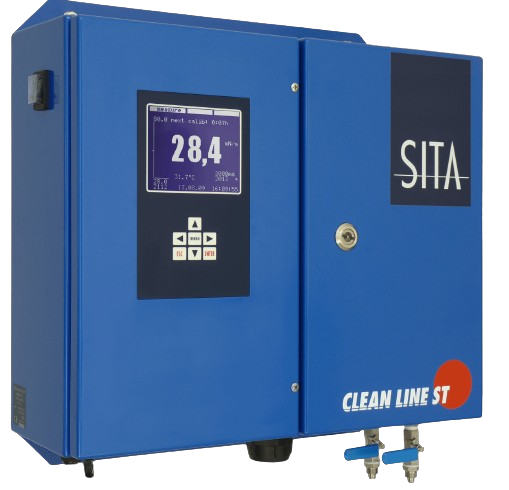
The SITA clean line ST measures dynamic surface tension of aqueous cleaning and rinsing baths directly inline with the production process.
Dynamic surface tension reflects the active surfactant concentration—only surfactants that are still available for cleaning, not those already bound to oils or contaminants.
This makes surface tension measurement a process-relevant control parameter, not just a laboratory value.
How does the bubble pressure method work?
Both SITA DynoTester+ and SITA clean line ST use the bubble pressure method:
-
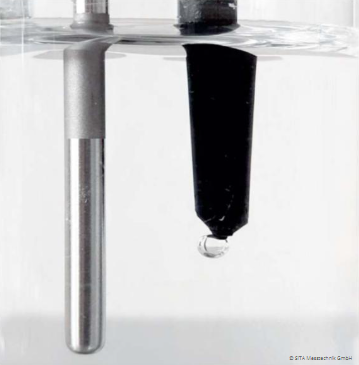
Air bubbles are formed at a capillary tip in the cleaning solution
-
Each bubble creates a new surface
-
Active surfactants migrate to that surface and reduce its tension
-
Pressure changes during bubble formation are measured
-
Dynamic surface tension is calculated based on bubble lifetime
By adjusting bubble lifetimes from milliseconds to seconds, the measurement adapts to:
-
Very low surfactant concentrations (rinsing baths)
-
Very high surfactant concentrations (cleaning baths)

Why dynamic surface tension is better than chemical analysis
Dynamic surface tension measurement offers key advantages over photometry or chromatography:
-
Measures only active surfactants
-
Ignores surfactants already bound to oils or dirt
-
Delivers immediate results
-
Works directly in contaminated industrial baths
-
Requires no reagents or complex sample preparation
This makes it ideal for real-time industrial process control.
SITA DynoTester+: mobile surface tension control
The SITA DynoTester+ is a portable tensiometer for fast, on-site surface tension measurements.
Key benefits:
-
Quick verification of cleaning and rinsing baths
-
Converts surface tension directly into surfactant concentration (e.g., g/L or vol%)
-
Ideal for maintenance, audits, and process troubleshooting
-
Simple operation with minimal training
It is commonly used to:
-
Prevent under- or over-dosing
-
Validate chemical supplier parameters
-
Detect surfactant carryover early
SITA clean line ST: Automated Process Monitoring
The SITA clean line ST is designed for continuous inline surface tension measurement.
Why manufacturers use it:
-
Real-time monitoring without manual sampling
-
Early detection of surfactant carryover into rinsing baths
-
Integration with control systems for automatic re-dosing
-
Robust design for harsh production environments
Inline measurement enables closed-loop control, improving:
-
Cleaning consistency
-
Bath lifetime
-
Chemical efficiency
-
Downstream process reliability
Why manufacturers monitor surface tension instead of concentration ratios
Traditional dosing adds surfactants and builders in fixed ratios, even though:
-
Surfactants and builders are consumed differently
-
Dirt load and throughput vary
-
Rinsing contamination can spike unexpectedly
Surface tension measurement reflects what actually matters:
How much active surfactant is available to clean parts right now.

